This word "content"
Kidscreen is gone. Dead. It's time we really pick apart the factors that got us here. This is simply one of them...


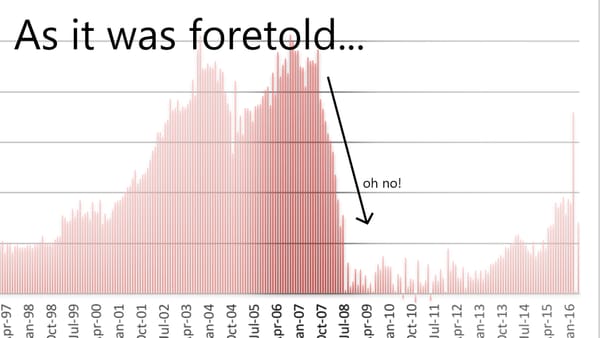
Kidscreen Conference is no more. It has shuttered after decades of being the go-to event for the kids media industry. I made so many connections there, had so many good times there, and did a lot of business there. That it can't continue is a very clear signal. The industry is not in a good place. There are a large number of factors and I think it's important to look at all of them. Not to point fingers (well maybe we need to do that a couple of times) but instead to understand what brought us here because, team, the things that caused this won't get us out of it. Like I said in a LinkedIn post yesterday: this isn't transition, this is the result. The things the industry has been chasing over the last decade... (gestures all around) ...this is what it got us.
Even before I knew Kidscreen was over, I wanted to talk about one of these factors: the word content. Let's talk about what that word has done to us.
Once upon a time, we had film. We had television. We had dramas, soaps, game shows, period pieces, musicals and so on and so on and so on. Many of these we watched together, as family, as siblings, as friends. And yet each one of these things was very different, meeting different needs, often serving different audiences.
The number of channels exploded and expanded. Each niche found its own home and we started taking more of an individual watching approach. We later got YouTube and Twitch and the like. We got vlogs, Let's Play videos, unboxing videos, we got Vine (gone too soon) then TikTok, Instagram reels. And along that journey we also had a beautiful moment of Flash cartoons.
Somewhere along the line, someone (I don't know who but they need a good talking to) decided to call all of this, everything, not one piece of media excluded, “content” and, in an instant, this created the view that these things are all competing with each other and, even in an age of micro-targeted demographics and algorithms, should be considered one audience we're all supposed to chase. A zero-sum game of attention seeking.
And that, team, is in part where things went wrong.
Yes, we compete for attention. This is nothing new.
In the early days of cinema, people could have stayed home to read a book instead. Or they could have gone to see a cabaret show. Or listened to the wireless. Or gone out to play sports with their friends. But imagine a situation where everyone involved in all those other activities got together and said “well, cinema is a thing so now we have to follow our audience. We're all cinema now”. And so books are written as silent movies and stocked only in theatres, leaving libraries empty of what people actually want to read. Cabaret becomes just a silent mimic of Harold Lloyd performed by the local players. Sports people decide that people don't want interaction or the live experience and only show matches in cinemas. Everything at once tries to follow that audience to the cinema, trying to figure out how they can emulate the success and capture attention again.
And then they wonder what happened to their audience when it doesn't work.
Of course that didn't happen. Instead, cinema was allowed to be cinema. Books are still books. The radio has survived all those monumental changes. Sports events might be bigger than ever, I don't know (I'm not a sports guy). And as I write that paragraph above, I realise it sounds a bit ridiculous that each form of entertainment would try to appeal to audiences in the wrong places and in the wrong ways but it's kind of what I've watched many of us do over the last ten years.
As someone who has followed and enjoyed these newer forms of entertainment and had them in my house, even a long time ago it struck me as madness when people would try to push their way into spaces that simply aren't a fit for them. For example, people watching the success of DanTDM and thinking, if we put our thing where DanTDM is, we'll have that same level of success or, inversely, if we bring DanTDM into our realm, he'll do great here. Nope. That's not always how it works.
DanTDM did what he did brilliantly in the exact home that was right for him.
And he wasn't doing cinema. Or drama. Or musicals. Or anything other than what DanTDM did. And his audiences wanted what he was doing. Shove a period drama into that same space and call it Let's Play Period and I can assure you that it would be no guaranteed success (wait, that idea might actually... nah...).
Now there are always crossover exceptions of course, and there are good things to learn from those. But even looking at those exceptions will often reveal they didn't always quite do what might be expected outside of their best homes. Look beyond those one or two exceptions and you'll see thousands that, unfortunately, crash and burn.
Cinema will generally not compete on TikTok (nor will you make up your production cost there). Game shows won't thrive on Discord. Unboxing videos won't prop up AMC cinemas. These are not the same thing. That's the reality. The same rules don't apply. All “content” is not the same and it's not even close.
And I think the sooner we stop looking at it that way, the better.
That's not to say we can't or shouldn't look at other homes or for other audiences. We absolutely should. Especially now that everything has changed. Every new platform opens up new opportunities and that's exciting as a storyteller and now essential from a business perspective. Explore that! But let's do so with an awareness and acceptance of what it is that we actually make, what we're actually good at making, what its strengths are and what our ideal audience want from that and where they to go for it. Let's take some time to understand all that.
Then embrace it.
Embrace that thing we do well. And serve the audiences that want it, rather than desperately chasing an audience that simply doesn't.
I think we could benefit from ditching the word “content” and, in doing do, rediscovering all those people who love what we make.