Conquering the blank page
A post about making something from nothing, and how there are few things more paralysing than the blank page. Here's how I overcome that in order to take a project from the beginning to completion...

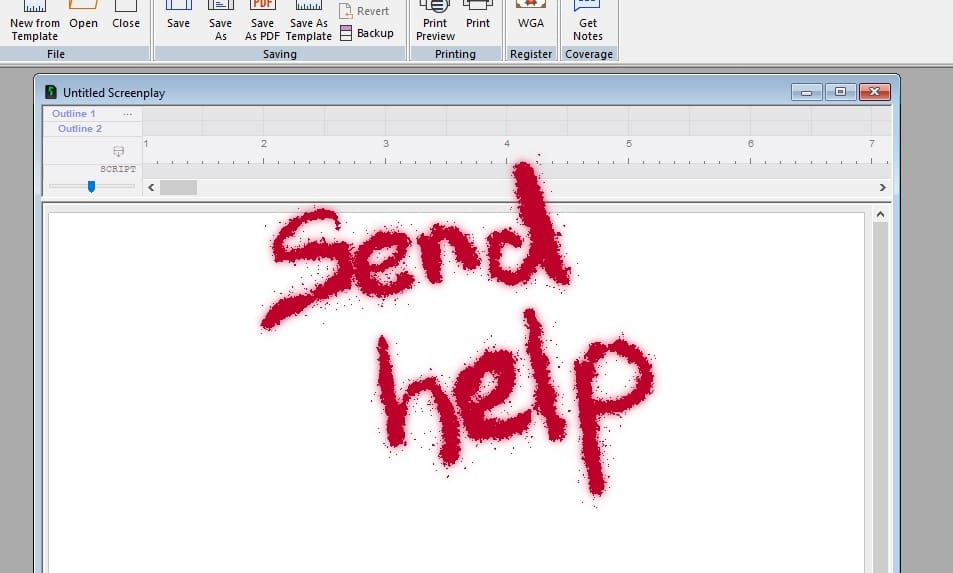
Hi team! It always amazes me when what starts from nothing, a blank page, can lead to a show, a movie, an experience, an adventure, emotions, stories that last, and also work and a paycheck for a lot of people for a long period of time. As creators, we bring things into existence.
Over the years, I have taken a lot of shows and other projects from that nothing, the very first idea, all the way through to the finished product and one thing I learned early on is this: there is nothing more paralysing than that blank page. The blank page looks so daunting. I see the emptiness, starting from zero. I feel the weight of the mammoth task ahead. Where do I even begin?
Sound familiar?
If so, then you'll also know that, even if you can find a place to start, it is very common to hit the next blank page somewhere in the process and just stop. That's it. The project, film, game, maybe even book, whatever you are creating goes no further.
So when I got serious about creating, I built my process around avoiding the blank page. I never have to face the blank page. And that got me through a couple of early feature screenplays (they were terrible but at least they were finished), the very first show I got off the ground in which I wrote all of the episodes and then it got me through pretty much every TV show, film script and project I have worked on since (all finished but also they got better).
No blank page. Ever.
So how do you avoid the blank page? It's actually quite simple. The first step is, at the earliest point in the process, when just coming up with the ideas, don't have a page. Just imagine. Talk. Chat through ideas with people. There's no pressure to fill a page if you haven't got a page.
When you already have a few ideas (formed or not, doesn't matter) take notes on post-its or a notebook or whatever. Wait, Jay! Isn't that a blank page? Technically maybe but that's why we start as small as possible. Nobody will struggle to fill a post-it. It's not a script page so I'm not calling it a proper blank page.
Those notes will start to become something at a certain point. A few of the ideas will come together. When that happens and you have lots of notes to work from (LOTS - do this as late as you can), transcribe them all into a document and start to order them. Now this is your working document. No blank page. You already had the text to put into it the moment you opened it.
You keep working it until you can put a real shape to it, going from this document to thoughts to notes and back again. And keep doing that and you'll realise you have a story. And you organise the best of those notes in the right order and paste them into a new document - that is now where you're going to build your outline from. You're not looking at a blank page. It's all there in note form already. You just have to make it work and make it pretty.
Treatment? You build out from a worked outline.
Script? You paste your well thought out treatment into Final Draft or whatever you use and you build it from there.
No blank page.
So the process looks like this:
1 Imagine, talk, chat through the ideas
2 Take notes
3 Copy notes onto a page
4 Flesh out from there
5 Copy fleshed out notes to start outline
6 Copy outline to start treatment... and so on.
Repeat, repeat, repeat.
But the big thing? The brainwork, the thought, the imagining, the ideas, do them AWAY from the page. So when you sit down to type, you're not struggling to come up with stuff. Instead, you're simply putting down what you already know.
Over my career, this method has served me well. There are more details, of course, like how I get from Draft 1 to Draft 2, what happens when I need to completely re-evaluate and so on, and maybe I can go into that sort of thing in if people are interested, but these are the basics. A lot of that heavy lifting and thought is done away from the page. And each time the page is approached, there is already stuff either on the page or ready to paste into it.
It works.
Now, here's the twist: as much as this method has worked for me over the years and I stand by it, I have realised later in my career that there is sometimes a lot of value to the blank page. There are times when you need the blank page. And now in an age where we have ways of totally avoiding that blank page (I'm looking in your direction, AI), we might need to remember why that blank page is so important. That's a topic for the next post.
If you haven't already, subscribe to the mailing list to get that right in your inbox. See you then!